
There were over a dozen long-living cultures thriving in the Caucasus Mountain ranges of Soviet Georgia. Collectively, we will refer broadly to this group of cultures as Georgians, even though our primary focus is directed to one of these cultures known as the Abkhasians. The Abkhasian culture is comprised of both Christians and Muslims.

Prof. Pitskhelauri’s elite team spent four decades studying hundreds of these longest-living peoples, observing that aging is commanded by genetic resilience, environmental determinants, and lifestyle practices.
His highly qualified team of specialists isolated many, but far from all, of the key environmental determinants that optimized both genetic expression and intracellular enzyme systems that govern life (proteomics). Both are responsible for bringing about thriving longevity in human beings. MID specifically focuses on the genomics and proteomics of the long-living, and pertaining modern day references to effectuate our ministry of healing.
Digging deeper, Pitskhelauri’s team identified key aspects to these long-living peoples’ lifestyle that became clearly discernable to the highly trained eyes of his team. Careful reading of his team’s findings identified seven persistent practices these long-living people performed 24/7, which was thought to be the foundation to their thriving longevity.
The Seven Foundational Practices
- Cleansing, detoxification, purification and ‘earthing’ practices;
- Daily exercise which included deeply breathing and at regular times joyful choir singing and dancing;
- Longevity Replenishment rich in (a) colloidal regenerative factors (CRFSTM) and (b) rich amounts of a full-spectrum of minerals, consumed in amounts never in excess;
- Adequate deep restful sleep;
- Mental discipline, morality, devotion to God, joyfulness, thankfulness, playfulness and good humor;
- Full spectrum sunlight exposure;
- Pollution-free, pristine air, food and water.
Verifying the Ages of the Long-Living
Meticulous verification of these long-living peoples’ collective lifespans was established. I quote from his 1982 writing on pages 50-1.
“Recognizing the importance of establishing the accurate age of long-living persons, the Institute of Gerontology of the USSR Academy of Medical Sciences included rechecking and documentation of age in its program of medical examinations of selected persons 80 years and older... information on birth certificates is taken under consideration, as well as the passport, village council accounting books, and other documents… These data... are compared with the questionnaire data and other questions on the chart where age and year are shown. When determining age, the subject or closest relatives are closely questioned. Information gained from such interviews are correlated with events of historical, local, and familial significance.”

Georgian D. Ch. Labachuya, 142 years of age at death.
Throughout the ~40 years of these meticulous studies, his team of gerontologists, anthropologists and physicians memorialized these long-living individuals by making extensive photographic records, taking and recording their personal and family histories, and charting thoroughly examinations on both their mental and physical characteristics. Throughout history one can find numerous examples of persons having lived for extraordinarily long periods of time. Always it comes down to their optimal expression of their gene resilience, pristine environment and unique lifestyle.
A Photographic Record of Longevity
Skeptics often allege (without sufficient proof) that collecting accurate verification of the extreme long-living cannot be reliably ascertained due to inadequate written records and the phenomena of ‘age exaggeration’. But the records compiled by researchers like Sula Benet, PhD, and Prof. Pitskhelauri provide a powerful counter-narrative. Their extensive photographic records and documented histories offer a glimpse into a reality of human potential rarely seen in the modern world.
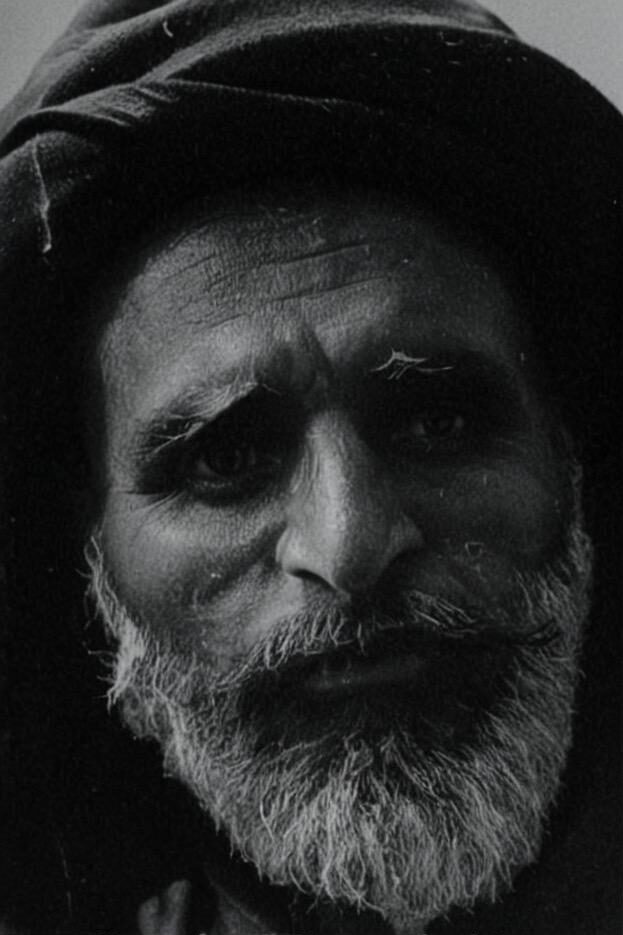
Georgian Sulamen Arshha, 123 years of age

Two Georgian friends: Lt. Temur Vanacha (110) and Rt. K. Dzhidahariva (75)
Recorded Cases from the USSR Census (1959)
- Aytraliyev Ismail: 160 years old (Azerbaijan SSR)
- Mertiyeva Sarguz Kerem: 156 years old (Azerbaijan SSR)
- Shirali Mislimov: Lived to 168, with 220 descendants.
- Makhmud Eyvazov: Lived for 150 years, remarkable for his health and alertness.
A Legacy of Vitality
During the All-Union Population Census of 1970, many more centenarians were found, such as R.V. Gogolade (132 years old) and L.G. Bigvava (130 years old). The Abkhazian, Khapara Kiut (1785-1935), was documented to be 155 years old. These were not just records of age, but testaments to lives filled with work, family, and community, often maintaining tremendous working capacity well past the century mark.
The Female Advantage and Premature Aging

Georgian O.M. Kashibadzo, age 107, holding freshly harvested corn.
In Georgia, Khfaf Lasuri was still living at 138 years of age when Pitskhelauri wrote his book. It was common for women among long-living cultures to live longer than men. Factors included men's higher exposure to occupational hazards and lifestyle stresses in civilization. Furthermore, pregnancy and childbirth may offer a regenerative, cellular therapy-like benefit to women. It was noted that women who did not have children, or who had abortions, were rare among the long-living.
Prof. Pitskhelauri wrote extensively on “premature” aging. He argued that our bodies’ blueprints contain an aging process entirely different from what modern civilization experiences. He showed that “natural” or “physiological aging” actually starts at 100 and above. What happens in modern civilization is a pathology he called premature aging, beginning between 60 and 70.
"The concept of premature aging... is a positive perspective because it denotes that, although aging is a natural process, it can be initiated before its time by improper health habits, insalubrious environments, and the lack of significant social roles."
The Wisdom of the Ancients
Pitskhelauri quotes a poem by Arnold of Villanova (1235-1311) that perhaps best describes the mental and physical fortitude common to the long-lived:
If you wish health to return, And not to know disease,
Drive away the weight of care, And consider anger to be unworthy,
Eat modestly, eschewing wine, Do not consider valueless
Wakefulness after dining, Scorning the afternoon nap,
Do not retain your urine long, Nor strain at the stool;
If you will follow this – you will live long in the world.
If there are too few physicians, let your physician be
Three: Cheerful nature, tranquility, and moderate diet.
By carefully identifying the practices of past primary traditional-adhering (pta) peoples, we can now delineate their longevity lifestyle practices, so that everyday members of civilization can make their fate like that of the historical pta-people of the world.